
- AB-Pressure
What Surfaces Benefit Most From Professional Pressure Washing?
Professional pressure washing works best on exterior surfaces that collect embedded dirt, organic growth, traffic residue, and weather-related contamination. Concrete, masonry, pavers, siding, and other materials respond differently to water pressure, so the cleaning method must match the surface rather than rely on maximum force.
Using the wrong pressure can cause erosion, finish damage, displaced joints, or moisture intrusion. Knowing which surfaces benefit most helps property owners choose effective cleaning without creating avoidable damage. This guide explains suitable surfaces, cleaning limitations, common contaminants, professional methods, and when expert service makes practical sense.
Which Surfaces Benefit Most From Professional Pressure Washing?
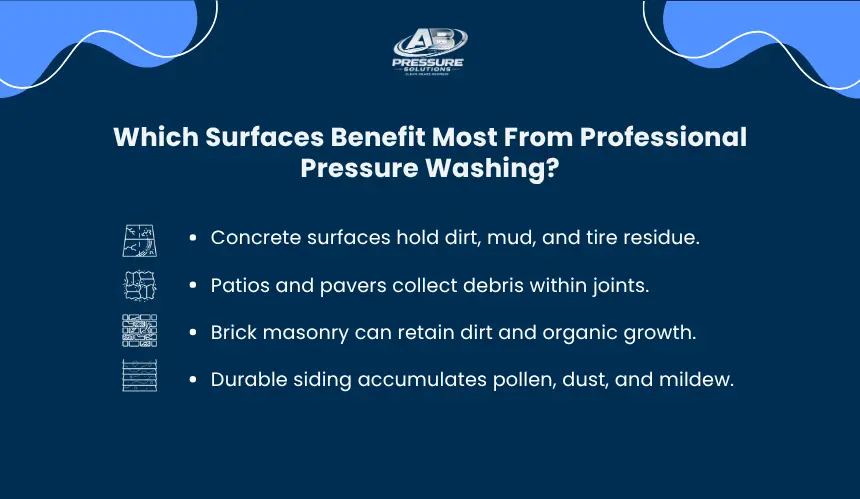
Concrete, hardscapes, masonry, and certain exterior wall materials typically receive the greatest benefit from professional pressure washing. Their exposure to traffic, moisture, airborne contaminants, and outdoor debris allows residue to accumulate beyond what routine rinsing can remove.
Concrete Driveways and Walkways
Concrete driveways and walkways are strong candidates because their textured, porous surfaces can retain soil, mud, tire residue, and fine debris. Repeated vehicle and foot traffic can press contaminants into surface irregularities, creating darker traffic paths and uneven discoloration that basic hose cleaning may leave behind.
Professional equipment provides controlled water flow and mechanical cleaning force across larger concrete areas. Heavily used sections can also receive targeted treatment for tire marks, automotive residue, or localized grime instead of increasing pressure across the entire surface unnecessarily.
Patios, Pavers, and Hardscape Surfaces
Patios and paving stones collect contamination across both their exposed faces and the joints between individual units. Soil, plant debris, algae, and weather-related residue can settle into textured finishes, producing patchy staining and darker areas around edges or drainage paths.
Professional washing allows pressure and spray distance to be adjusted according to the stability of the installation. Well-set pavers may tolerate stronger cleaning, while aging hardscapes or surfaces containing loose joint sand require controlled pressure to prevent displacement or erosion.
Brick and Masonry
Brick walls, retaining walls, and other masonry surfaces frequently hold atmospheric dirt and moisture-related growth within their porous texture. Mortar joints add recessed areas where algae, soil, and fine environmental debris can remain even after normal exterior rinsing.
Pressure washing can clean sound masonry effectively when the force is matched to its condition. Older brick or deteriorating mortar requires greater caution because concentrated pressure may erode joints, damage brick faces, or worsen existing defects rather than simply remove contamination.
Exterior Walls and Durable Siding
Durable siding and exterior wall materials can collect pollen, dust, mildew, and airborne residue across broad vertical surfaces. Buildup is often heavier around shaded walls, roof runoff areas, nearby vegetation, and lower elevations exposed to soil splashback.
Professional cleaning provides consistent coverage by controlling water pressure, spray angle, and working distance. Durable materials may tolerate pressure-assisted washing, while coated, aging, or flexible siding may require lower pressure to prevent surface marking or water from entering behind panels.
Which Surfaces Require Lower Pressure or Specialized Cleaning?
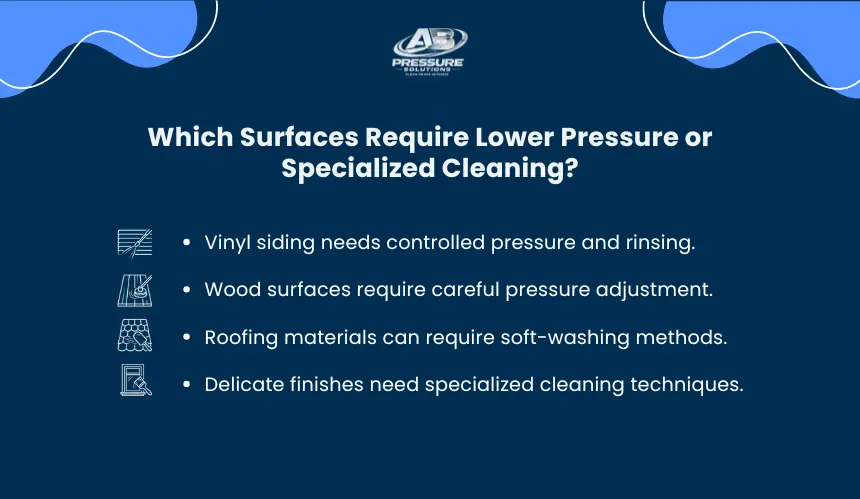
Not every exterior material benefits from conventional high-pressure cleaning. Wood, painted surfaces, roofing, and certain siding systems can still be cleaned professionally, but they often require lower pressure or soft-washing methods.
Did You Know? Soft washing relies more on specialized cleaning solutions and controlled low-pressure water than mechanical force, making it better suited to delicate surfaces such as roofing, painted siding, stucco, and weathered wood where high pressure could cause surface damage.
Vinyl, Painted, and Composite Siding
Vinyl, painted, and composite siding can develop pollen, dirt, mildew, and environmental staining, but excessive pressure may damage finishes or force moisture behind overlapping sections. Concentrated spray can also loosen panels or expose weak areas in existing coatings.
These materials often respond better to cleaning solutions followed by controlled low-pressure rinsing. The chemical treatment loosens contaminants so they can be removed without depending on aggressive mechanical force against the surface.
Wood Decks and Fences
Wood requires careful pressure control because concentrated spray can raise the grain, leave visible cleaning lines, cause splintering, or remove softened fibers from weathered areas. Older wood and surfaces with deteriorating coatings are especially sensitive.
Professional cleaners adjust pressure according to the wood species, age, finish, and current condition. Controlled cleaning can remove surface dirt and organic buildup while leaving the material suitable for later staining, sealing, or other maintenance.
Roofing and Delicate Exterior Materials
Roof shingles, aging stucco, delicate coatings, and similar materials generally should not receive aggressive pressure washing. High-pressure water can loosen protective components, remove surface granules, fracture weak finishes, or direct moisture into vulnerable construction areas.
Soft washing is often more appropriate because it uses low water pressure combined with cleaning solutions designed to break down organic contamination. This shifts the cleaning mechanism from mechanical force toward controlled chemical treatment.
What Types of Buildup Can Professional Pressure Washing Remove?
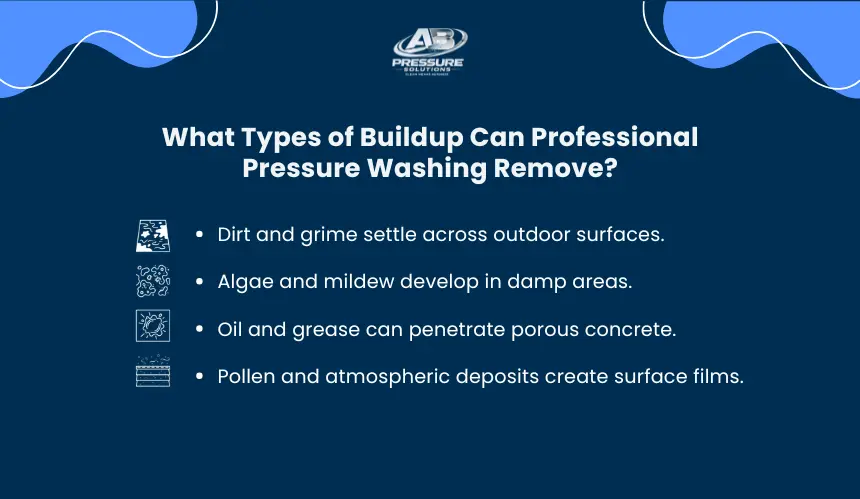
Pressure washing addresses several forms of exterior contamination, but results depend on the contaminant and how strongly it has bonded to the material. Dirt, biological growth, oil residue, and atmospheric deposits do not respond identically to cleaning.
Dirt, Mud, and General Grime
Driveways, walkways, patios, walls, and outdoor structures continuously collect soil through rainfall, landscaping, vehicle movement, and foot traffic. Once fine dirt settles into textured or porous surfaces and dries, light rinsing may remove loose particles without addressing deeper discoloration.
Controlled pressure washing combines water volume and surface agitation to release this residue more evenly. Consistent equipment movement also reduces the patchy appearance that can occur when only the most visibly dirty sections receive treatment.
Algae, Mildew, Moss, and Organic Growth
Organic growth commonly develops where moisture, shade, vegetation, or poor drainage keeps exterior surfaces damp. Algae and similar contaminants can form films across siding, concrete, masonry, and hardscapes instead of remaining as simple loose surface debris.
Professional cleaning may use a compatible treatment solution to weaken biological material before rinsing. This reduces the need to rely on excessive pressure and addresses the contaminant more effectively than repeatedly directing concentrated water at the same area.
Oil, Grease, and Vehicle-Related Residue
Driveways, garage approaches, parking areas, and service zones can develop oil spots, grease deposits, tire marks, and other vehicle-related contamination. Petroleum-based material may penetrate porous concrete when it remains untreated for extended periods.
Pressure washing can reduce this residue, but bonded oil often requires a degreaser or targeted pre-treatment first. Complete removal is not guaranteed when contamination has penetrated deeply, so stain age, surface porosity, and previous treatment affect the final result.
Weathering and Atmospheric Deposits
Pollen, dust, soot, leaf residue, and airborne particles gradually settle on exterior surfaces even when obvious stains are absent. Wind, vegetation, traffic, and roof drainage can create uneven accumulation across different elevations of the same property.
Professional washing removes these surface films more consistently than rainfall or occasional hose rinsing. Cleaning can restore a more uniform appearance by addressing accumulated environmental deposits across the full surface rather than treating isolated dirty areas.
How Do Professionals Match Pressure Washing to the Surface?
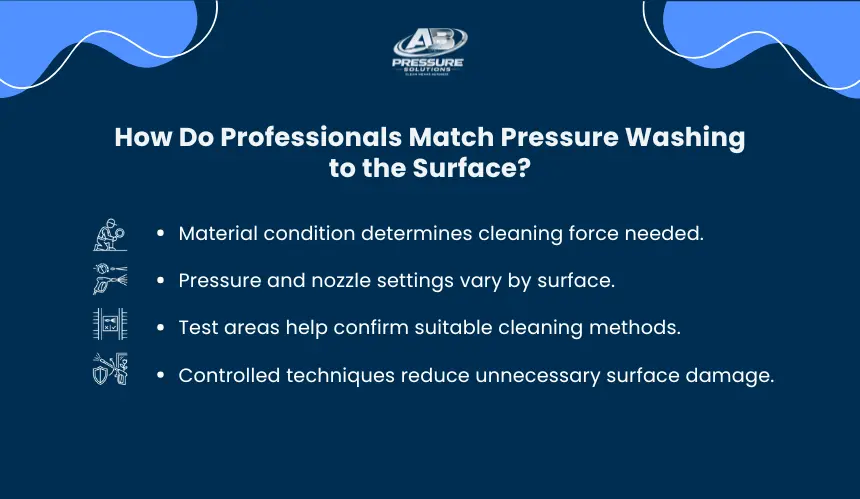
Professional pressure washing depends on selecting a cleaning method around the material, condition, and contamination present. Pressure is only one variable within a process that also involves water flow, nozzle configuration, cleaning chemistry, and spray technique.
Important Point: Higher pressure does not automatically produce better cleaning. Effective pressure washing comes from balancing PSI, water flow, nozzle angle, cleaning solution, and working distance so contaminants are removed without etching, stripping, or weakening the underlying surface.
Surface Material and Condition Assessment
Before cleaning, the surface should be evaluated for porosity, coatings, cracks, deteriorating mortar, unstable joints, loose components, and previous repairs. These conditions determine how much mechanical force the material can tolerate without being damaged.
Assessment also identifies places where water could enter gaps or accelerate existing deterioration. Recognizing vulnerable areas before washing allows pressure, chemistry, and application methods to be modified accordingly.
Pressure, Nozzle, and Cleaning Solution Selection
Effective cleaning depends on more than PSI. Water flow, spray width, nozzle angle, working distance, detergent strength, and dwell time all affect how efficiently contamination separates from the substrate.
Professionals adjust these variables instead of using one setting across an entire property. Durable concrete may accept greater mechanical force, while siding or coated materials may depend more heavily on cleaning solutions and wider, lower-pressure spray patterns.
Test Cleaning and Controlled Technique
A test area can reveal whether the selected pressure and treatment method will clean effectively without producing etching, discoloration, coating loss, or other visible changes. Testing is particularly useful on weathered or previously repaired materials.
During cleaning, consistent spray movement reduces striping and concentrated surface damage. Landscaping, windows, electrical components, fixtures, and neighboring materials may also require protection from overspray, runoff, or cleaning solutions.
When Is Professional Pressure Washing the Better Choice?
Professional service becomes more practical when cleaning involves extensive areas, stubborn contamination, several material types, or surfaces where incorrect technique could cause damage. The decision should consider both cleaning difficulty and material risk.
Large or Heavily Soiled Areas
Large driveways, patios, commercial walkways, walls, and other broad surfaces can be difficult to clean consistently with consumer-grade equipment. Smaller cleaning paths and limited water flow may increase working time while producing noticeable differences between sections.
Professional equipment allows larger areas to be treated with more consistent coverage. Heavily contaminated zones can also receive separate pre-treatment instead of exposing lightly soiled surfaces to unnecessarily aggressive cleaning.
Persistent Stains or Organic Growth
Contamination that has remained through several weather cycles can become bonded to porous or textured materials. Repeated hose rinsing may have little effect on established algae, mildew, traffic residue, or grease.
Professional cleaning combines treatment products, dwell time, controlled agitation, and rinsing according to the contaminant involved. This is generally safer than repeatedly increasing pressure in an attempt to force difficult staining from the surface.
Delicate or Mixed Exterior Materials
Many properties combine concrete, wood, masonry, siding, painted finishes, and pavers within the same exterior area. A single pressure setting is unsuitable because these materials have different tolerances and construction characteristics.
Professional cleaning methods can change as work moves from one material to another. Pressure, nozzle type, cleaning chemistry, and rinse technique can be adjusted so stronger surfaces receive adequate cleaning without exposing vulnerable surfaces to the same force.
Preparing Surfaces for Maintenance or Refinishing
Cleaning may be required before exterior surfaces are painted, stained, sealed, or coated. Dirt, organic growth, loose residue, and other contaminants can interfere with surface preparation and prevent the substrate from being consistently ready for the next treatment.
Professional pressure washing can remove appropriate contamination before refinishing when the cleaning method suits the material. Adequate drying time is also necessary because retained moisture can affect stains, paints, sealers, and protective coatings.
Frequently Asked Questions
Do pavers need new joint sand after pressure washing?
Pressure washing can remove some joint sand, particularly when the spray is directed into joints or excessive pressure is used. After cleaning, the joints should be inspected once the surface dries. If noticeable material has been displaced, compatible joint sand or polymeric sand may need to be replenished according to the paving system’s specifications.
Should I reseal my driveway or pavers after professional pressure washing?
Pressure washing does not automatically mean a surface must be resealed. However, cleaning creates an opportunity to inspect an existing sealer for wear, fading, or loss of protection. When resealing is planned, the surface should first be thoroughly cleaned and allowed to dry according to the sealer manufacturer’s application requirements.
What is the white chalky residue left on brick or pavers after cleaning?
White powdery deposits are often efflorescence, which forms when moisture carries soluble minerals toward the surface and leaves salts behind as the water evaporates. Ordinary pressure washing may not fully remove it. A compatible efflorescence cleaner may be required, and repeated deposits can justify checking drainage or other persistent moisture sources.
Where does the dirty water go during professional pressure washing?
Wash water can carry soil, oil residue, detergents, pesticides, pet waste, and other contaminants from driveways or hardscapes. Allowing contaminated runoff to enter storm drains may send pollutants into waterways without treatment. Professional cleaning should therefore account for drainage direction, local requirements, chemical use, and appropriate runoff management.
Can pressure washing affect a siding or decking warranty?
Manufacturer cleaning instructions matter because pressure washing is not approved for every product. Trex states that pressure-washer damage to certain early-generation decking can void applicable warranty coverage, while James Hardie advises against pressure washing its fiber-cement siding and recommends low-pressure hose cleaning instead. Check product-specific care documentation before cleaning manufactured surfaces.